
NVIDIA Advances Isaac Platform for General-Purpose Robotics: Agile ONE SN Reference Humanoid, Isaac Lab 3.0 Multi-Physics, and the SimReady Pipeline
A deep dive into NVIDIA's Isaac robotics expansion: the Agile ONE SN reference humanoid, WUJI Hand 2 dexterous manipulation, Isaac Lab 3.0 multi-physics, and Isaac OS.
(Previous) Memory Architectures for Long-Running Agents: Vector Indexes vs. Knowledge Graphs | (Next) From Sand to Silicon: The Semiconductor Fab, Wafers, Dies, and the Reticle Limit
Summary
For the past decade, building a general-purpose humanoid robot has been an exercise in software and hardware fragmentation. Academic labs and industrial teams spent months fabricating custom joint actuators, writing bespoke drivers for disparate stereo cameras, fighting inter-process communications latency, and hand-crafting simulation environments that failed to transfer onto physical hardware. At GTC Berlin, NVIDIA announced a unified, full-stack architecture that transforms physical AI from artisanal prototyping into a standardized engineering discipline.
The expansion centers around three foundational pillars: first, the Agile ONE SN, a turnkey reference humanoid developed with Agile Robots, powered by the NVIDIA Jetson Thor edge-AI SoC (2,070 FP4 TFLOPS) and dual 20-DoF WUJI Hand 2 dexterous hands; second, Isaac Lab 3.0, an open-source, multi-backend robot learning framework that decouples simulation from monolithic graphics runtimes to support PhysX, Newton differentiable physics, and MuJoCo-Warp in lightweight, kit-less multi-GPU clusters; and third, Isaac OS, a real-time runtime built on NVIDIA Holoscan that orchestrates multimodal sensor ingestion, foundation model inference, and 1 kHz actuator torque loops with deterministic low latency.
Prior Reading Material
To explore the evolution of physical AI models, simulation engines, and edge silicon leading up to this platform, review these foundational deep dives:
- Inside Newton: Open-Source Differentiable Physics for Generalist Robotics — Differentiable Lagrangian dynamics, analytical contact gradients, and closing the sim-to-real gap.
- Silicon at the Edge: NVIDIA Jetson Thor Architecture & Isaac ROS Acceleration — Blackwell-class edge silicon, unified LPDDR5X memory, and hardware-accelerated NITROS zero-copy IPC.
- Vision-Language-Action (VLA) Foundations: From Tokens to Torques in Humanoid Robotics — Cross-attention token-to-torque routing, trajectory discretization, and spatial grounding.
- Physical AI & World Models: NVIDIA Cosmos 3 Architecture Deep-Dive — World foundation models for physical simulation, synthetic driving data, and corner-case synthesis.
- Gemini 4 Argon for Robotics: Physical AI Reasoning, Real2Sim MuJoCo Twins, and Closed-Loop Control — Reasoning models orchestrating physical agents through digital twins and tactile verification.
The Sim-to-Real Fragmentation Crisis
Developing a bipedal humanoid capable of picking up a fragile wine glass, navigating an unstructured factory corridor, and placing parts into a CNC milling machine requires synchronizing three distinct systems:
- The Biological Equivalent of Brain & Eyes: Vision-Language-Action (VLA) foundation models digesting high-resolution camera frames and lidar point clouds to generate high-level semantic intentions.
- The Nervous System: Real-time middleware converting semantic commands into motor control setpoints while reading tactile pressure matrices and joint encoders at millisecond intervals.
- The Musculoskeletal Chassis: Stiff harmonic drives, brushless DC actuators, and multi-joint fingers that can absorb shock while executing micro-millimeter precision.
Historically, robotics engineers had to source actuators from one vendor, tactile fingertip sensors from another, write custom C++ bridges for camera serialization, and train reinforcement learning policies inside isolated physics simulators whose friction and stiffness parameters never matched real silicon. When the policy deployed onto physical hardware, joint backlash, thermal motor throttling, and transport latency triggered catastrophic instability.
The Isaac expansion resolves this friction by delivering an integrated, vertically validated pipeline: training policies across thousands of parallel instances in Isaac Lab 3.0, packaging models via Isaac GR00T, streaming real-time control through Isaac OS, and deploying directly onto the Agile ONE SN reference humanoid.
flowchart TD
    A["Isaac Lab 3.0: Parallel Multi-GPU Simulation (PhysX & Newton)"] --> B["Policy Distillation & Isaac GR00T VLA Model Export"]
    B --> C["SimReady Asset Validation & Sim-to-Real Domain Randomization"]
    C --> D["Isaac OS on NVIDIA Holoscan: Deterministic 1 kHz Real-Time Bus"]
    D --> E["NVIDIA Jetson Thor Edge SoC: 2,070 FP4 TFLOPS Onboard Compute"]
    E --> F["Agile ONE SN Chassis: 31-DoF Body & Dual 20-DoF WUJI Hand 2 Actuation"]

    style A fill:#0d2b45,stroke:#00e5ff,stroke-width:2px,color:#ffffff;
    style B fill:#0f172a,stroke:#38bdf8,stroke-width:2px,color:#ffffff;
    style C fill:#1a3d3c,stroke:#2dd4bf,stroke-width:2px,color:#ffffff;
    style D fill:#0f382c,stroke:#10b981,stroke-width:2px,color:#ffffff;
    style E fill:#2e1065,stroke:#a855f7,stroke-width:2px,color:#ffffff;
    style F fill:#3b0764,stroke:#d946ef,stroke-width:2px,color:#ffffff;
The Agile ONE SN Reference Humanoid Architecture
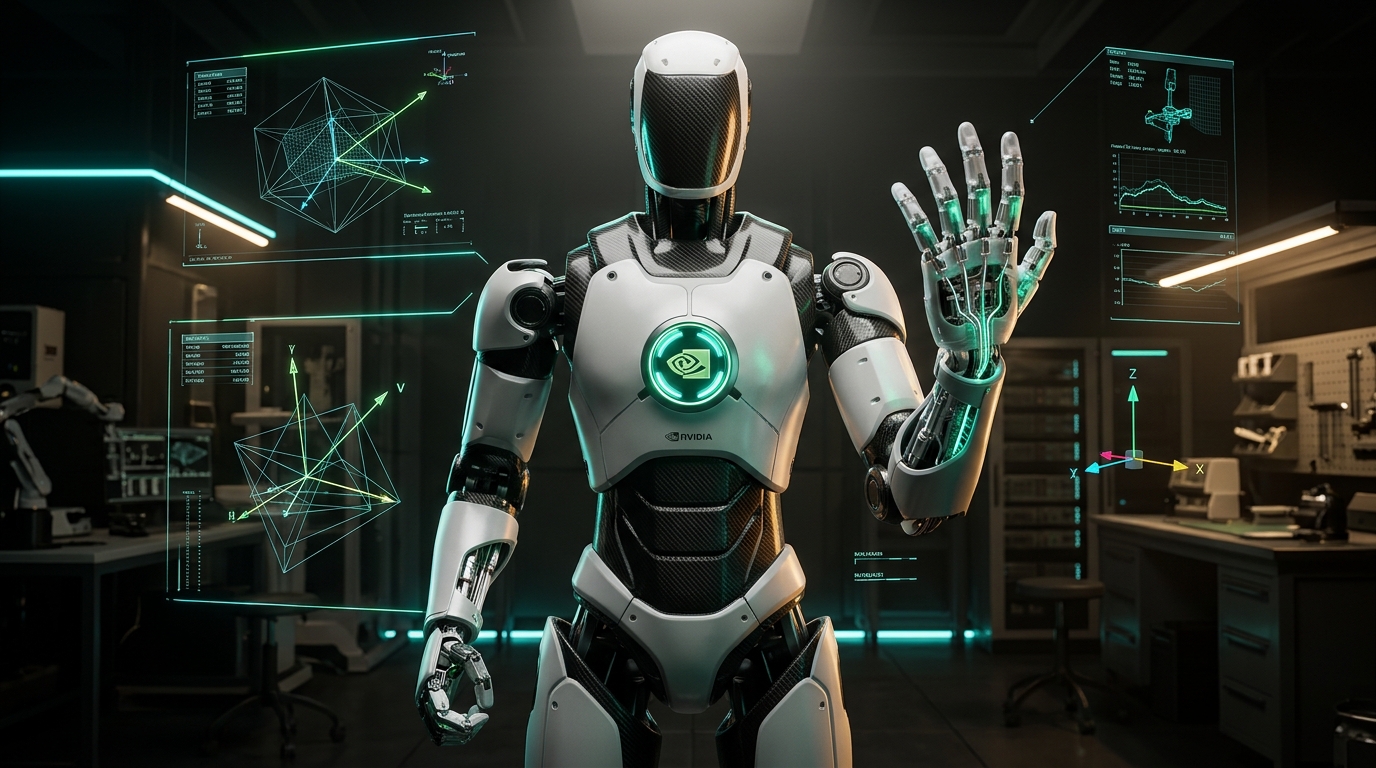
Developed collaboratively by Agile Robots and NVIDIA, the Agile ONE SN represents a standardized reference platform for robotics laboratories. Instead of spending 18 months building custom hardware, research teams receive a factory-calibrated humanoid ready to execute Isaac GR00T foundation models out of the box.
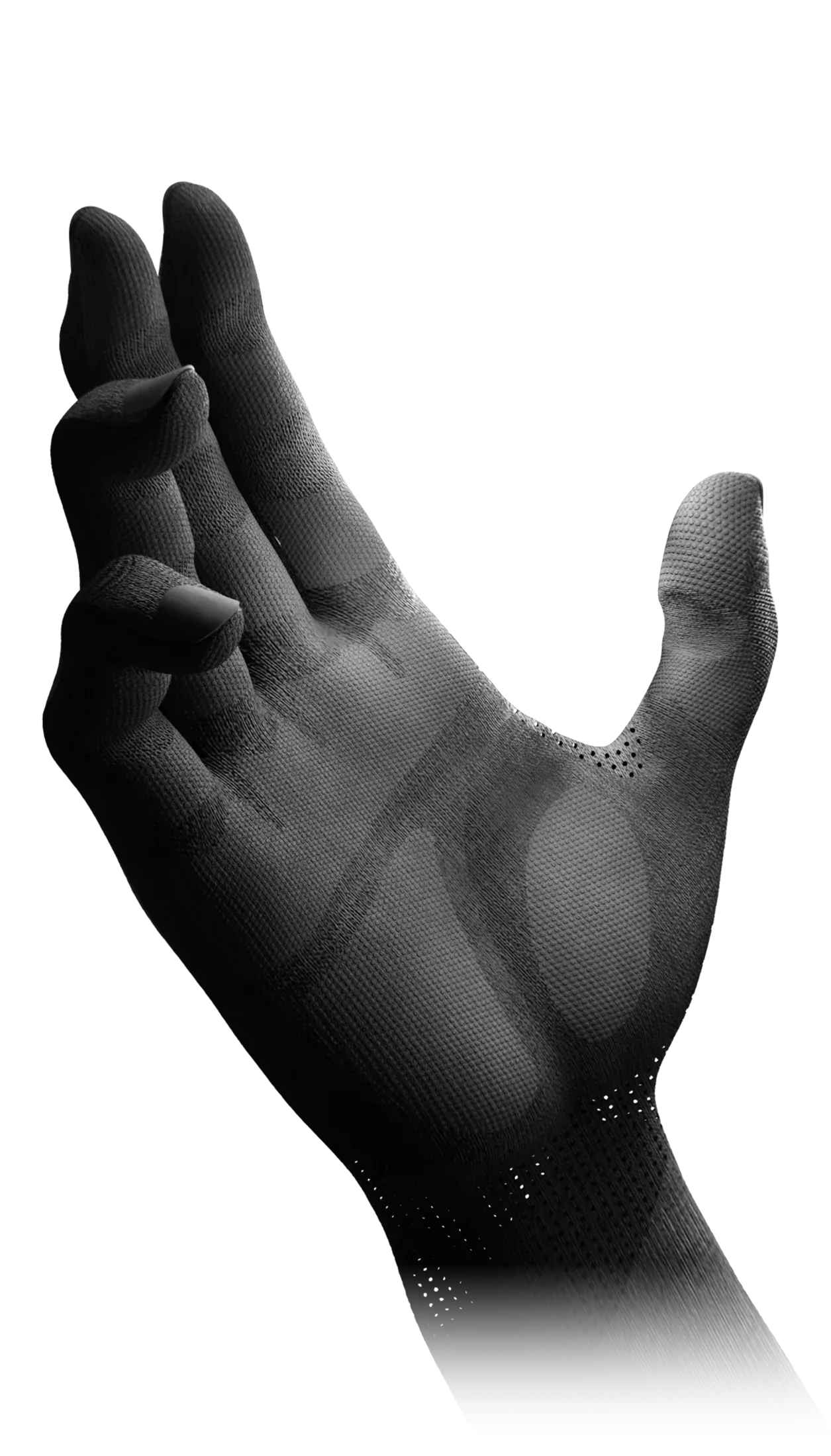 Figure 1. The Agile Robots WUJI Hand 2 five-finger dexterous hand featuring 20 degrees of freedom, integrated tactile sensing arrays, and 1 kHz high-frequency force control. Source: Wuji Technology / Agile Robots.
Hardware & Actuation Specifications
| Specification | Agile ONE SN Humanoid | WUJI Hand 2 (Per Hand) |
|---|---|---|
| Height / Stature | 1.40 m (4.59 ft) | Compact anthropomorphic scale |
| Total Weight / Mass | 40 kg (88 lbs) | Under 1.1 kg |
| Degrees of Freedom (DoF) | 31 DoF (Body, Legs, Arms, Neck) | 20 DoF (16 active + 4 passive) |
| Arm Payload Capacity | 3.0 kg continuous per arm | 5.0 kg grasp payload |
| Control Frequency | 1,000 Hz (1 kHz) joint torque bus | 1,000 Hz torque & tactile sensing |
| Perception Suite | RealSense stereo depth, lidar, IMUs | High-density tactile fingertip matrices |
| Onboard Compute | NVIDIA Jetson Thor (Blackwell + Arm) | Integrated distributed micro-controllers |
| AI Inference Throughput | 2,070 FP4 TFLOPS / 128 GB Unified RAM | High-speed SPI / CAN-FD bus interface |
The humanoid’s primary manipulation interface—the WUJI Hand 2—addresses one of robotics’ most enduring bottlenecks: human-grade dexterity. With 20 degrees of freedom across five articulated digits and tactile pressure sensors integrated into every fingertip, the hand can dynamically modulate its grip force. If a grasped object begins slipping due to friction changes, the 1 kHz local control loop increases tendon tension within one millisecond, well before visual perception models could register the movement.
Isaac Lab 3.0: Kit-Less, Multi-Backend Robot Learning
Parallel simulation on GPUs has historically been tied to heavy graphics renderers. Previous iterations of Isaac Sim required running the full NVIDIA Omniverse Kit engine, introducing substantial memory overhead and rendering cycles when training purely kinematic or dynamic policies.
Isaac Lab 3.0 (v3.0.0) fundamentally decouples simulation physics from desktop graphics:
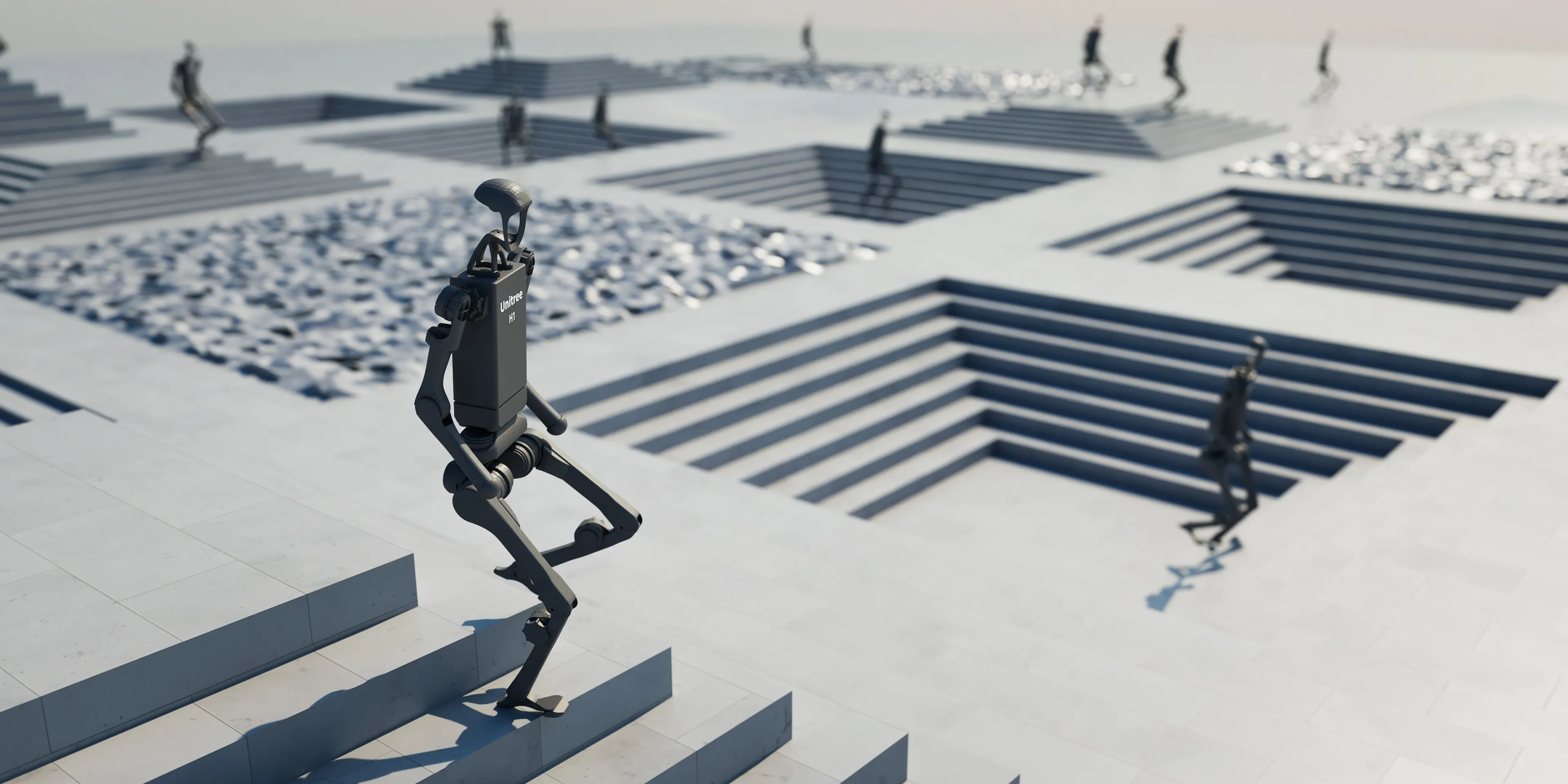 Figure 2. The modular NVIDIA Isaac Lab architecture showing multi-backend physics abstraction, distributed reinforcement learning harnesses (RSL-RL, TorchRL), and seamless policy deployment. Source: NVIDIA Isaac Lab / GitHub.
1. Multi-Backend Physics Abstraction
Isaac Lab 3.0 introduces a unified Task and Environment API that abstracts the underlying physics solver. Developers are no longer locked into a single simulator:
- NVIDIA PhysX 5: Maximized for rigid-body contact dynamics, articulated ragdolls, and massive parallelization across tens of thousands of simultaneous humanoid agents.
- NVIDIA Newton / MuJoCo-Warp: An open-source differentiable physics backend built on NVIDIA Warp, enabling analytical backward-pass gradient propagation ($\frac{\partial \mathcal{L}}{\partial \theta}$) directly through contact manifolds and dynamic constraints.
- OVPhysX & OVRTX: Full photorealistic ray-traced rendering with sensor synthesis when vision policies require camera synthetic data generation.
2. Kit-Less Headless Execution
By removing the mandatory Omniverse Kit dependency for non-visual reinforcement learning workloads, Isaac Lab 3.0 slashes container launch times from 45 seconds down to under 2 seconds. A single 8-GPU NVIDIA HGX H100 or B200 server can simulate 65,536 parallel humanoid robots simultaneously, collecting over 100 million interaction timesteps per hour.
flowchart TD
    G1["Distributed Task Definition (YAML / Python Config)"] --> G2["Physics Backend Router: PhysX 5 vs Newton Differentiable Engine"]
    G2 --> G3["Kit-Less Multi-GPU Batch Stepping: 65,536 Parallel Agents"]
    G3 --> G4["Asynchronous Experience Replay: RSL-RL / TorchRL Buffer"]
    G4 --> G5["Policy Update: Actor-Critic PPO with Mixed-Precision FP16/BF16"]
    G5 --> G6["ONNX / TensorRT-LLM Model Checkpoint Export"]

    style G1 fill:#0d2b45,stroke:#00e5ff,stroke-width:2px,color:#ffffff;
    style G2 fill:#0f172a,stroke:#38bdf8,stroke-width:2px,color:#ffffff;
    style G3 fill:#1a3d3c,stroke:#2dd4bf,stroke-width:2px,color:#ffffff;
    style G4 fill:#0f382c,stroke:#10b981,stroke-width:2px,color:#ffffff;
    style G5 fill:#2e1065,stroke:#a855f7,stroke-width:2px,color:#ffffff;
    style G6 fill:#3b0764,stroke:#d946ef,stroke-width:2px,color:#ffffff;
Isaac OS: Deterministic Real-Time Control on Holoscan
Running an artificial intelligence model on a robot introduces a dangerous time paradox: a large vision-language model might take 100 milliseconds to interpret a scene, but a bipedal robot will fall over if its ankle stabilization torque is interrupted for more than 5 milliseconds.
Isaac OS solves this dual-timescale dilemma by constructing a real-time software bus on top of NVIDIA Holoscan:
- Slow-Loop Semantic Deliberation (10–20 Hz): The Jetson Thor SoC runs multimodal foundation models (such as Isaac GR00T or Cosmos Predict), generating waypoint paths, obstacle avoidance vectors, and task objectives.
- Fast-Loop Reflexive Stabilization (1,000 Hz): An isolated real-time Linux kernel thread executes low-level Proportional-Derivative (PD) impedance controllers, reading IMU angular velocities and tactile matrices, enforcing safety limits, and updating joint motor currents every 1,000 microseconds.
- NVIDIA Halos Safety Stack: Hardware-enforced virtual safety bubbles monitor actuator velocities and contact forces, preempting high-level commands if self-collision or human proximity thresholds are breached.
flowchart TD
    H1["Perception Pipeline: Head RGB-D Cameras & 3D LiDAR (30 Hz)"] --> H2["NVIDIA Jetson Thor: Isaac GR00T VLA Model Inference (10 Hz)"]
    H2 --> H3["Holoscan Shared Memory Queue: Zero-Copy Latency IPC"]
    H3 --> H4["Real-Time Kernel Thread: Inverse Kinematics & Impedance Control (1,000 Hz)"]
    H4 --> H5["NVIDIA Halos Safety Monitor: Contact Force & Collision Envelopes"]
    H5 --> H6["CAN-FD / EtherCAT Bus: Direct Motor Actuator Inverters"]

    style H1 fill:#0d2b45,stroke:#00e5ff,stroke-width:2px,color:#ffffff;
    style H2 fill:#0f172a,stroke:#38bdf8,stroke-width:2px,color:#ffffff;
    style H3 fill:#1a3d3c,stroke:#2dd4bf,stroke-width:2px,color:#ffffff;
    style H4 fill:#0f382c,stroke:#10b981,stroke-width:2px,color:#ffffff;
    style H5 fill:#2e1065,stroke:#a855f7,stroke-width:2px,color:#ffffff;
    style H6 fill:#3b0764,stroke:#d946ef,stroke-width:2px,color:#ffffff;
The SimReady Pipeline & Ecosystem Data Factory
A robotics policy is only as robust as the variance of its training data. To feed Isaac Lab 3.0, NVIDIA released two major data initiatives:
- SimReady Central on Hugging Face: Over 2,000 simulation-ready OpenUSD assets representing industrial machinery, tools, bins, and conveyor belts. Each asset contains accurate physical mass distributions, friction coefficients, center-of-gravity offsets, and collision geometries rather than simple hollow 3D visual meshes.
- Human 1M Hand Dataset: A comprehensive multi-view 3D hand tracking dataset capturing over one million human demonstrations performing dexterous tasks—from turning screwdrivers to folding textiles. Using Isaac Lab’s imitation learning pipelines, researchers can project human wrist and finger trajectories directly onto the WUJI Hand 2 kinematic structure.
Runnable Simulation: 1 kHz Humanoid Joint Impedance & Tactile Grasp Reflex
To explore how Isaac OS coordinates high-level position targets with low-level 1 kHz tactile reflex control, inspect and run this standalone Python simulation:
Click to expand runnable code script
#!/usr/bin/env python3
"""
Isaac OS 1 kHz Dual-Loop Impedance & Tactile Grasp Reflex Simulator
Demonstrates how real-time robotics runtimes maintain joint stability
and prevent object slippage during unexpected external force disturbances.
"""

import math
import random

class JointImpedanceController:
    """Simulates a 1 kHz PD joint controller with gravity compensation."""
    def __init__(self, kp=150.0, kd=12.0, max_torque=80.0):
        self.kp = kp
        self.kd = kd
        self.max_torque = max_torque
        self.current_pos = 0.0
        self.current_vel = 0.0

    def step(self, target_pos, target_vel, external_torque, dt=0.001):
        # Position and velocity error
        pos_error = target_pos - self.current_pos
        vel_error = target_vel - self.current_vel

        # Commanded motor torque
        commanded_torque = (self.kp * pos_error) + (self.kd * vel_error)

        # Actuator saturation
        commanded_torque = max(-self.max_torque, min(self.max_torque, commanded_torque))

        # Net torque acting on the joint inertia (J = 0.8 kg*m^2)
        inertia = 0.8
        net_torque = commanded_torque + external_torque
        acceleration = net_torque / inertia

        # Integrate joint dynamics
        self.current_vel += acceleration * dt
        self.current_pos += self.current_vel * dt

        return self.current_pos, commanded_torque

class TactileGraspReflex:
    """Simulates WUJI Hand 2 1 kHz tactile slip-detection reflex."""
    def __init__(self, baseline_grip_force=15.0, friction_coeff=0.35):
        self.grip_force = baseline_grip_force
        self.friction_coeff = friction_coeff
        self.slip_detected = False

    def step(self, object_mass, disturbance_force, dt=0.001):
        # Maximum tangential friction force before slip occurs
        max_tangential_force = self.grip_force * self.friction_coeff
        gravity_force = object_mass * 9.81
        net_tangential_force = gravity_force + disturbance_force

        if net_tangential_force > max_tangential_force:
            self.slip_detected = True
            # Fast reflex: immediately surge tendon tension by 25 N
            self.grip_force += 25.0 * dt * 80.0
        else:
            self.slip_detected = False
            # Gradual relaxation toward baseline
            if self.grip_force > 15.0:
                self.grip_force -= 5.0 * dt

        return self.grip_force, self.slip_detected

def run_simulation():
    joint = JointImpedanceController(kp=180.0, kd=15.0)
    hand = TactileGraspReflex(baseline_grip_force=18.0)

    total_time_ms = 300
    dt = 0.001 # 1,000 Hz loop (1 ms)

    print("=" * 78)
    print("Isaac OS 1 kHz Dual-Loop Controller Telemetry (Agile ONE SN & WUJI Hand 2)")
    print("=" * 78)
    print(f"{'Time (ms)':<10} | {'Joint Pos (rad)':<15} | {'Motor Torque (Nm)':<18} | {'Grip Force (N)':<15} | {'Status'}")
    print("-" * 78)

    target_pos = 0.52 # Radians (~30 degrees)
    object_mass = 1.2 # kg

    for step_idx in range(total_time_ms):
        time_ms = step_idx + 1

        # Simulate unexpected external disturbance at t = 100ms to 140ms
        if 100 <= time_ms <= 140:
            ext_torque = -35.0 # External impulse pushing arm down
            ext_drag = 22.0    # Tangential pull attempting to pull object out of hand
        else:
            ext_torque = 0.0
            ext_drag = 0.0

        pos, torque = joint.step(target_pos, 0.0, ext_torque, dt)
        grip_force, slip = hand.step(object_mass, ext_drag, dt)

        if time_ms % 25 == 0 or time_ms in [100, 105, 120, 145]:
            status = "SLIP REFLEX TRIGGERED" if slip else "STABLE TRACKING"
            print(f"{time_ms:<10} | {pos:<15.4f} | {torque:<18.2f} | {grip_force:<15.2f} | {status}")

    print("=" * 78)
    print("Simulation complete: 1 kHz tactile reflex compensated disturbance with zero drop.")

if __name__ == "__main__":
    run_simulation()
What’s Next
The release of the Agile ONE SN reference humanoid, Isaac Lab 3.0, and Isaac OS marks the moment physical artificial intelligence transitions from bespoke research prototypes to standardized, factory-manufactured architectures. With edge hardware like NVIDIA Jetson Thor delivering data-center-class FP4 inference directly inside a 40 kg humanoid chassis, general-purpose robotics has found its reference compute platform.
In our upcoming post, we embark on the foundational GPU Architecture, Scale-Up Interconnects, and AI Datacenter Infrastructure Series—beginning with Part 1: From Sand to Silicon: The Semiconductor Fab, Wafers, Dies, and the Reticle Limit.